Thinking about buying, selling, or holding a property in Woodland Hills with ADU potential? You are not alone. For many homeowners and investors, an accessory dwelling unit can open the door to rental income, added flexibility, and stronger long-term value, but only if the property and numbers make sense. This guide walks you through what to know about ADU rules, costs, rental demand, and due diligence in Woodland Hills so you can make a smarter move. Let’s dive in.
Why ADUs Matter in Woodland Hills
In Woodland Hills, ADUs are getting attention for a simple reason: they can create more usable housing on a property you already own or plan to buy. Depending on the lot, the existing improvements, and the city rules that apply, an ADU may give you space for rental income, guests, extended household use, or future resale appeal.
Because Woodland Hills is within the City of Los Angeles, ADU projects follow California state ADU law along with Los Angeles rules and permitting through LADBS. The state’s ADU guidance has been updated recently, so it is smart to treat the rules as current and evolving as you review any opportunity. According to the California HCD ADU handbook, ADU law continues to be refined, which makes up-to-date property review especially important.
ADU Rules You Should Know
For most residential parcels in Los Angeles, ADUs may be built in areas that allow residential use. That broad starting point is helpful, but the details still matter. Lot layout, existing structures, utility setup, and permit history can all affect what is practical.
According to LADBS ADU guidance, new ADUs do not require parking if they are within a half-mile walk of public transit. The same guidance says that if covered parking is removed to make room for an ADU, it does not need to be replaced.
That can make some garage-conversion scenarios more realistic than many buyers expect. It also means a property that seems limited at first glance may deserve a closer look if location and layout line up.
Setbacks and Conversions
Conversions often have a simpler path than building from the ground up. Under California ADU guidance, an existing living area or accessory structure converted to an ADU in the same location can avoid new setbacks.
By contrast, a new detached replacement structure generally uses a maximum four-foot side and rear setback. That difference can have a big effect on design flexibility, timeline, and cost.
JADU Basics
If you are looking at a single-family property, a junior accessory dwelling unit may also come into play. The City of Los Angeles explains that a JADU can be no larger than 500 square feet and must be contained within the single-family residence, as noted on the LA Housing ADU page.
That makes a JADU a more limited option than a full ADU, but in the right home it may still offer useful flexibility. Whether it fits your goals depends on layout, intended use, and local compliance.
Owner Occupancy and Approval Timeline
One common question is whether you need to live on the property in order to rent out an ADU. State guidance reflected in Los Angeles materials confirms that owner-occupancy requirements were removed from ADU law, so an owner does not need to live on-site just to rent the ADU.
Processing is also meant to be more streamlined than many people assume. According to California HCD ADU approvals guidance, ADU applications are handled ministerially, without discretionary hearings, and a complete application generally must be approved or denied within 60 days. LADBS also offers a standard-plan program that may help shorten plan check for repeat designs.
What ADUs Typically Cost
Cost is where many ADU ideas become either realistic or risky. The total can vary sharply based on the type of ADU, site conditions, finish level, utility work, and how much new construction is required.
A county planning study found rough ADU costs of about $150 to $300 per square foot in general, while noting that in competitive California markets costs can exceed $600 per square foot. In the same study, sample ranges were about $60,000 to $150,000 for basement or garage conversions, $100,000 to $216,000 for attached new construction, $128,000 to $225,000 for above-garage new construction, and $110,000 to $285,000 for detached new construction, according to the ADU cost study.
As a practical takeaway, conversion projects are often the lower-cost path, while detached new construction is usually the most expensive. That does not mean detached ADUs are the wrong move. It simply means the lot, budget, and expected rent need to support the plan.
Permit Fees and City Costs
In Los Angeles, fees can also affect your budget in a meaningful way. The City’s housing analysis estimated about $8,448 in permit fees for a new-construction ADU with a valuation of $121,200 and about $1,045 for a garage conversion valued at $20,000, according to the City planning analysis.
The same analysis states that ADUs and JADUs are exempt from Park and Quimby fees and from the Affordable Housing Linkage Fee. That can help, but it does not eliminate the need for careful budgeting.
LADBS also notes that detached ADUs built from scratch must include solar panels. That means energy-code and electrical compliance should be treated as part of your base project cost, not as an optional add-on.
Woodland Hills Rental Potential
The rental story is one reason ADUs continue to attract attention in Woodland Hills. As of March 2026, Apartments.com rent trends for Woodland Hills report average rent around $2,421 to $2,425 per month, with studios around $1,893 to $1,916, one-bedrooms around $2,421 to $2,425, and two-bedrooms around $3,132 to $3,134.
That same source says rents were down about 4% year over year. So while the market appears active, you still want to underwrite conservatively rather than assume rents only move one way.
Realtor.com’s February 2026 Woodland Hills market page showed a median monthly rental price of $3,050 and 566 active rentals, describing the area as a balanced market. Together, those figures suggest Woodland Hills has meaningful rental activity without looking unusually one-sided.
What Type of ADU May Rent Best
For many Woodland Hills properties, the most relevant comparison set for an ADU is the small-unit rental market. Based on the apartment rent data, a well-finished studio or one-bedroom ADU would likely compete more directly with smaller apartment units than with full single-family home rentals.
That matters when you estimate rent. A detached ADU with privacy and strong finishes may command a different response than a basic conversion, but the local small-unit market is still a useful starting point for expectations.
ADUs and Property Value
An ADU is not just a rent play. It may also influence resale appeal and long-term value, especially when it is legally permitted and thoughtfully integrated into the property.
A 2025 FHFA analysis of California properties with ADUs found that single-family properties with ADUs had a median appraised value of $1.064 million in 2023, compared with $715,000 for comparable properties without ADUs. The study also found higher annualized value growth from 2013 to 2023 for properties with ADUs, at 9.34% versus 7.65% without ADUs.
That does not guarantee a dollar-for-dollar return on construction cost in every situation. Still, it supports the idea that a legal ADU can strengthen a property’s market position over time.
Los Angeles also notes on its ADU information page that homeowners commonly build ADUs to generate rental income and increase resale value or home equity. For buyers, that same resource highlights the importance of verifying what has actually been permitted and built.
Rent Rules and Due Diligence
If you are buying or evaluating a Woodland Hills property for rental potential, rent regulation should be part of your analysis early. In Los Angeles, ADUs and JADUs can fall under the Rent Stabilization Ordinance when the underlying property is covered.
According to LAHD RSO coverage guidance, properties first built on or before October 1, 1978 are generally subject to the RSO. LAHD also lists current annual fees of $38.75 per unit for RSO registration and $67.94 per unit for the SCEP fee. The agency further notes that a single-family home that is the only residential structure on the parcel is not subject to the RSO.
This is one of the biggest reasons buyers should avoid assumptions. Two properties with similar square footage and similar asking prices can have very different rental math depending on age, structure count, permit status, and local compliance.
Smart Questions to Ask
Before you buy or before you invest heavily in a build, it helps to ask a few direct questions:
- Is the existing ADU or conversion fully permitted?
- What records show legal construction and final sign-off?
- Is the parcel likely to support a conversion, attached ADU, or detached ADU?
- Would parking rules apply, or is the property close enough to transit to qualify for an exemption?
- Will the expected rent support the projected build and carrying costs?
- Could RSO rules apply based on the underlying property?
These questions can protect you from overpaying for unverified square footage or underestimating the cost to create legal rental income.
When an ADU Strategy Makes Sense
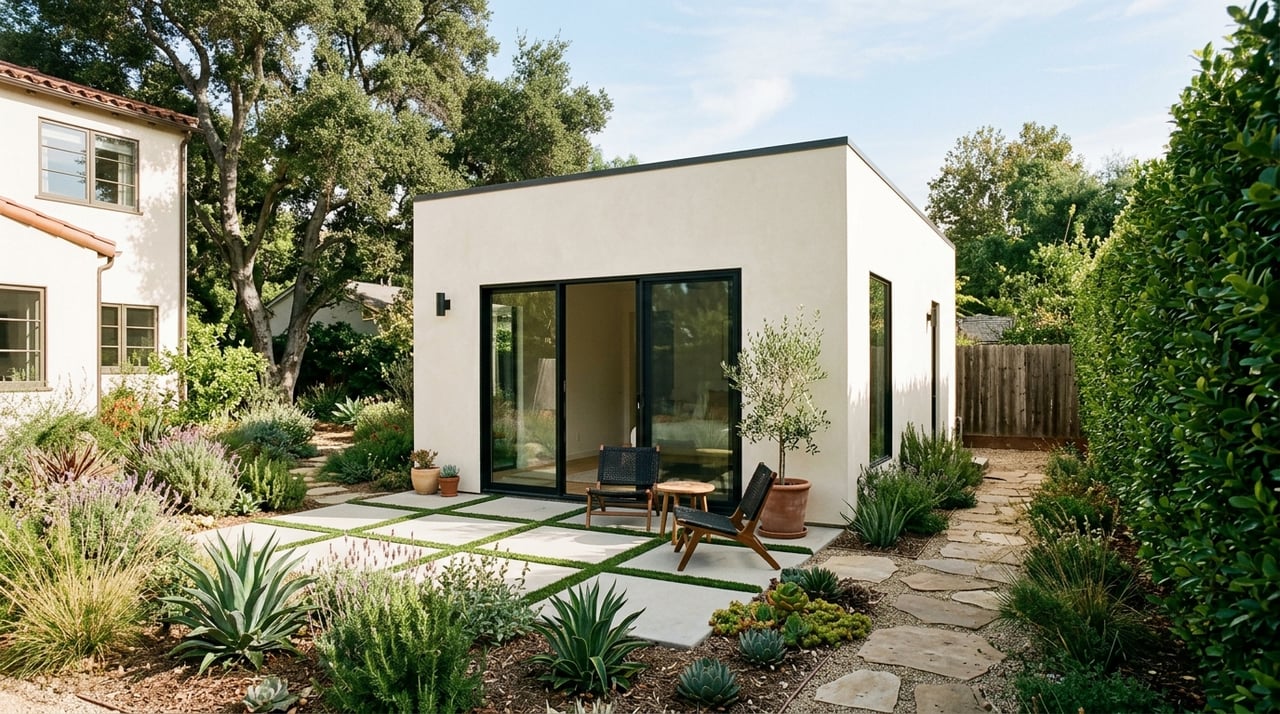
In Woodland Hills, the strongest ADU opportunities often come down to efficiency. A property with an existing garage, accessory structure, or interior area that can be legally converted may offer a simpler path than a lot that requires major site work and new utility runs.
Detached new construction can still be attractive, especially if privacy, layout, and long-term use are priorities. But because costs are often higher, the project usually works best when the lot can support it cleanly and the projected rent or resale benefit justifies the spend.
If you are comparing homes in Woodland Hills, ADU potential should be evaluated as a property-specific advantage, not a blanket assumption. The best opportunities are often the ones where zoning, layout, permit path, and rental math all line up.
How The Payab Group Can Help
Whether you are buying a Woodland Hills home with existing ADU potential or selling a property that already has added rental flexibility, the details matter. You want clear guidance on permit history, market positioning, likely buyer appeal, and how the property fits today’s local demand.
That is where local knowledge and hands-on support can make a difference. If you want help evaluating a home, understanding its resale story, or identifying properties with stronger upside, connect with The Payab Group. You will get thoughtful guidance, responsive communication, and a white-glove approach tailored to your goals.
FAQs
What are the main ADU rules in Woodland Hills?
- Because Woodland Hills is in the City of Los Angeles, ADUs follow California state law plus Los Angeles rules and LADBS permitting. Key items can include residential zoning eligibility, setback rules, parking exemptions near transit, and solar requirements for newly built detached ADUs.
What does it cost to build an ADU in Woodland Hills?
- Costs vary by project type and site conditions. Research cited in this article shows sample ranges from about $60,000 to $150,000 for some garage or basement conversions and about $110,000 to $285,000 for detached new construction, with higher costs possible in competitive California markets.
How much rent could an ADU in Woodland Hills generate?
- While ADU-specific lease comps were not provided in the research, Woodland Hills small-unit rents offer a useful benchmark. As of March 2026, studios were reported around $1,893 to $1,916 and one-bedrooms around $2,421 to $2,425.
Does an ADU increase property value in California?
- A 2025 FHFA analysis found higher median appraised values and stronger annualized value growth for California single-family properties with ADUs compared with similar properties without ADUs. That supports the value case, although results can vary by property and neighborhood.
Are ADUs in Woodland Hills subject to Los Angeles rent control rules?
- They can be, depending on the underlying property. LAHD states that ADUs and JADUs are included when the property is covered by the Rent Stabilization Ordinance, and properties first built on or before October 1, 1978 are generally subject to that ordinance.
What should buyers verify before purchasing a Woodland Hills home with ADU potential?
- You should verify permit history, legal construction status, records of final approvals, likely zoning and development standards, possible RSO coverage, and whether expected rent supports the total cost of ownership or future construction.